Intercept
Capture trash, sediment, debris and floatables before they enter downstream treatment.
PRETX · PRETX-LT · Kai Pono · inlet pretreatment

Pretreatment, biofiltration, storage, infiltration and control work best when they are coordinated around the site.
Convergent Water Technologies helps engineers, developers and municipalities assemble stormwater treatment trains that address water quality, flow, volume, maintenance and regulatory requirements as one connected system.

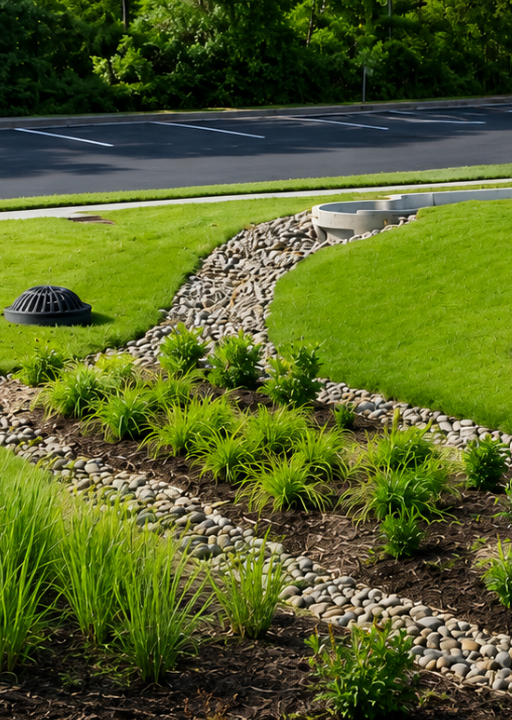
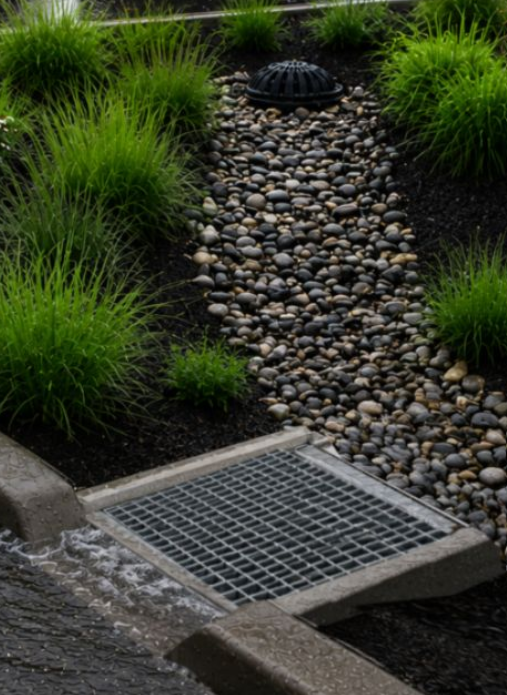
Stormwater rarely presents one problem at a time. Runoff can carry trash, sediment, nutrients, hydrocarbons and other pollutants while the project must also manage peak flow, storage, infiltration, groundwater, outfall elevation and long-term maintenance.
The strongest design does not ask one practice to do everything. It places each treatment mechanism where it can perform effectively, protects the next stage from avoidable loading, and keeps inspection and maintenance practical.
Not every project needs every stage. The sequence is selected around the site, the pollutants of concern and the required hydraulic response.
Capture trash, sediment, debris and floatables before they enter downstream treatment.
PRETX · PRETX-LT · Kai Pono · inlet pretreatment
Use biofiltration or bioretention to address water-quality goals and finer pollutants.
FocalPoint · traditional bioretention · bioswales
Provide detention, retention or reuse volume beneath or downstream of treatment.
R-Tank · modular underground storage · cisterns
Return treated runoff to native soils where site conditions and regulations allow.
expanded underdrains · GEPS · infiltration galleries
Manage release timing, batch treatment, monitoring or adaptive operation.
smartPOND · controlled outlets · managed discharge
Convergent technologies can work independently, with traditional stormwater practices, or as coordinated parts of a larger treatment train.
PRETX and PRETX-LT intercept sediment, trash, debris and floatables at an accessible inlet location. Kai Pono adds a shallow partner solution for curb-line pretreatment and configurable filtration.
FocalPoint provides high-performance modular biofiltration in a compact footprint. PRETX can also protect traditional bioretention, rain gardens and bioswales when conventional landscaped treatment is the right fit.
Expanded modular underdrains, R-Tank systems and other underground retention or detention systems can add storage, infiltration, reuse or channel-protection volume without consuming additional surface area.
Traditional bioretention remains a sound solution when space, soils and maintenance conditions support it. Upstream PRETX or PRETX-LT can reduce sediment and debris loading, while underground storage can add volume management.
Where infiltration is appropriate, GEPS and other project-specific infiltration strategies can help distribute treated runoff and restore a more natural hydrologic response.
smartPOND can add automated detention, batch treatment, monitoring or optimized release where passive controls alone cannot meet the project’s operational or regulatory needs.
These examples illustrate system logic, not standard details. Final component selection, sizing, elevations, bypass and performance criteria remain project-specific.
Accessible inlet pretreatment reduces trash and sediment loading before runoff reaches a conventional landscaped BMP, with detention or infiltration volume below or downstream.
A compact sequence that combines upstream protection, high-rate biofiltration and subsurface storage or infiltration.
A partner treatment train that captures gross solids and selected pollutants at the curb before compact downstream biofiltration.
Water-quality treatment and storage are followed by active control where the project requires batch operation, monitoring or optimized release.
I am text block. Click edit button to change this text. Lorem ipsum dolor sit amet, consectetur adipiscing elit. Ut elit tellus, luctus nec ullamcorper mattis, pulvinar dapibus leo.
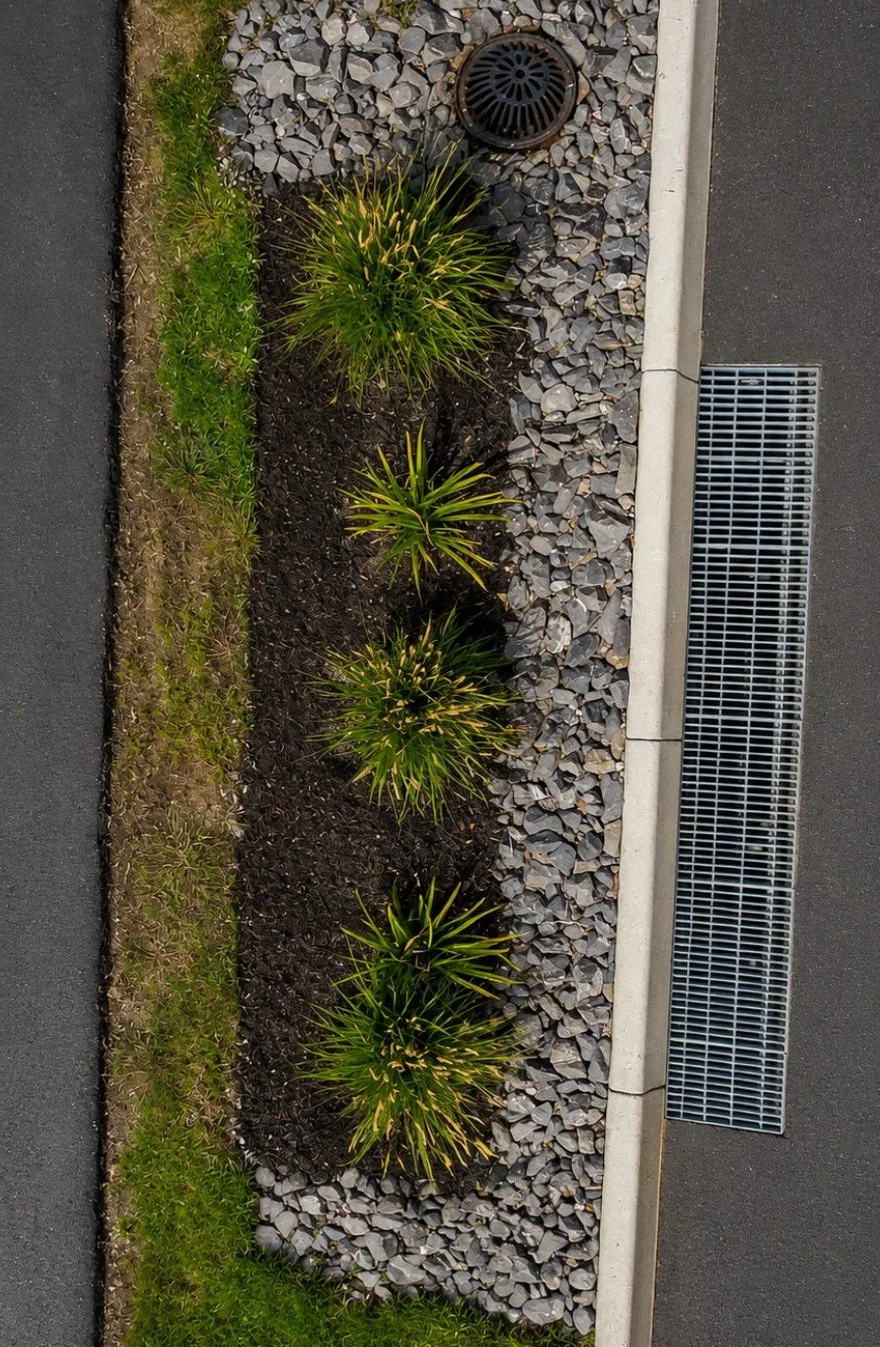
Shallow curb-line pretreatment upstream. Compact engineered biofiltration downstream.
Kai Pono captures trash, sediment and selected pollutants where runoff first enters the drainage system. FocalPoint then receives a cleaner influent stream and provides high-performance biofiltration in a compact landscaped footprint.
These projects demonstrate how pretreatment, FocalPoint and underground storage can be combined around real site constraints.
FocalPoint was combined with R-Tank underground storage, pretreatment and overflow protection to preserve parking while meeting treatment and channel-protection requirements.
Two compact FocalPoint systems were paired with expanded R-Tank underground detention to deliver landscaped treatment, storage and infiltration.
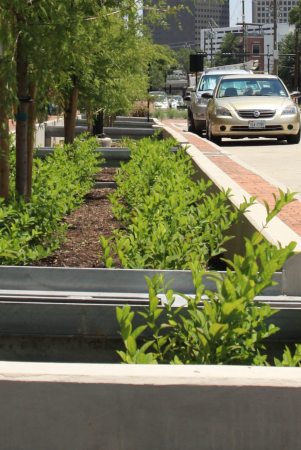
FocalPoint, upstream pretreatment and subsurface storage created a scalable treatment-and-detention strategy within narrow roadway esplanades.
Convergent supports project teams in evaluating the complete system rather than forcing a predetermined product package.
Drainage area, design storm, pollutants, soils, groundwater, outfall, footprint and maintenance constraints.
Determine where pretreatment, biofiltration, storage, infiltration, overflow and control belong.
Review grades, elevations, routing, bypass, storage volume, loading rates and outlet conditions.
Provide drawings, specifications, worksheets, product guidance and coordination with the project team.
These answers provide general guidance. Final treatment-train design and product selection should be based on the project’s hydraulic, regulatory and maintenance requirements.
A stormwater treatment train is a sequence of complementary practices or devices arranged so each stage performs a specific function. A typical sequence may include pretreatment for trash and sediment, biofiltration for water quality, underground storage or infiltration for volume management, and controlled release or monitoring.
Pretreatment captures trash, debris, floatables, gravel, and sediment before they reach the downstream treatment media. Keeping that material upstream can reduce clogging, simplify maintenance, preserve infiltration performance, and extend the useful life of the downstream practice.
Yes. PRETX and PRETX-LT are designed to intercept sediment, trash, debris, and floatables before runoff enters downstream green infrastructure. They can be evaluated upstream of traditional bioretention, rain gardens, bioswales, or other landscaped treatment systems.
FocalPoint serves as a high-performance biofiltration stage. It combines engineered biofiltration media with a modular underdrain and can be paired with upstream pretreatment, expanded underground storage, infiltration, detention, reuse, or controlled discharge.
Yes. FocalPoint can be designed with an expanded modular underdrain or connected to underground detention, retention, infiltration, or reuse systems. The final configuration depends on site hydraulics, elevations, soils, storage needs, and regulatory requirements.
Kai Pono provides shallow curb-line pretreatment that captures trash, sediment, and selected pollutants before runoff reaches FocalPoint. FocalPoint then provides compact engineered biofiltration downstream. The pairing keeps first-stage maintenance accessible while protecting downstream treatment capacity.
No. Some projects need only pretreatment and water-quality treatment. Others require detention, retention, infiltration, reuse, or controlled release. The treatment train should be assembled around the site and performance criteria rather than a fixed list of components.
Yes. smartPOND can be evaluated where active detention, batch treatment, optimized release, monitoring, or adaptive control is needed after upstream treatment and storage. Its role is project-specific and should be coordinated with the engineer of record.
Yes. Retrofit treatment trains can combine inlet pretreatment, compact biofiltration, underground storage, infiltration, or controls within existing infrastructure constraints. Available grade, utility conflicts, access, and bypass conditions are critical design inputs.
Selection and sizing begin with tributary area, design flow, pollutant targets, inlet and outlet elevations, available footprint, soils, groundwater, storage requirements, bypass routing, maintenance access, and applicable local criteria. Convergent works with project teams to evaluate the appropriate sequence and technical documents.
A well-designed treatment train places the material that is easiest to capture at an accessible upstream location. This can shift frequent sediment and trash removal away from downstream media, underground storage, or other systems that are more difficult and costly to restore.
Depending on the selected components and verified performance basis, treatment trains may address trash, gross debris, sediment, total suspended solids, nutrients, hydrocarbons, metals, bacteria, and other site-specific pollutants. Claims and media selections should be supported by current testing, approvals, and project-specific engineering.
Share the drainage area, design criteria, pollutants of concern, available footprint, inlet and outlet elevations, storage or infiltration goals, and maintenance constraints. Convergent can help the project team evaluate the sequence that fits.