Protecting Wetlands with Intelligent Stormwater Diversion
Automated water level control that helps prevent flooding, sustain wetland hydrology, and protect sensitive ecosystems.

Flood Protection
Automatically routes excess stormwater away when wetland levels approach the upper threshold.
Drought Support
Opens the diversion when wetland levels drop below the lower threshold.
Remote Monitoring
Water levels, gate status, photos, alerts, and system health are visible 24/7.
Wetlands depend on a precise hydrological balance. Too much water can drown emergent vegetation, displace nesting wildlife, erode banks, and flush sediment. Too little water can stress root systems, dry organic soils, and allow invasive upland plants to take hold.
Urban and suburban development compounds the issue. Increased impervious surfaces amplify runoff volume and velocity, sending surges of stormwater toward sensitive wetlands at the wrong time. smartPOND gives operators automated control over how stormwater is diverted, held, or released based on real-time wetland conditions.
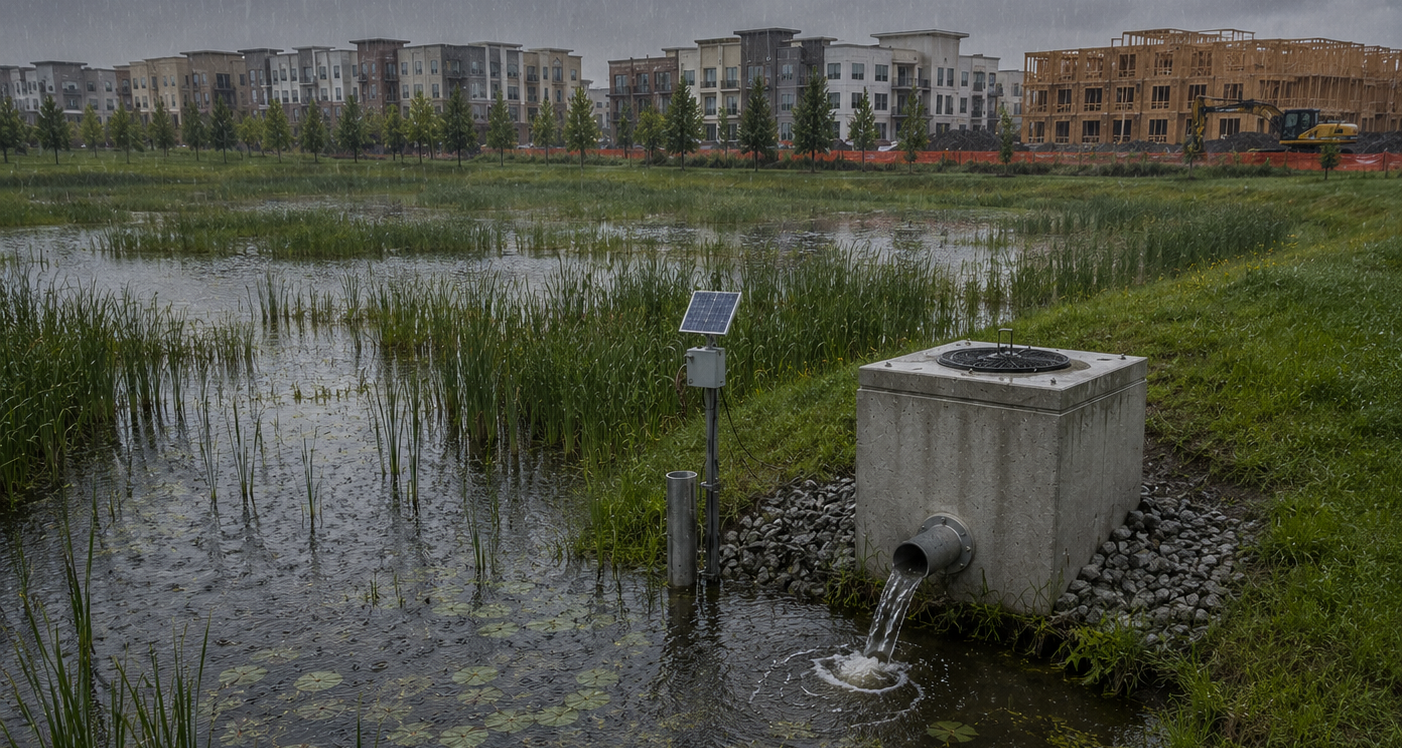
smartPOND provides precise, automated control over a diversion weir positioned between the stormwater system and the wetland. Continuous water level sensors installed in the wetland monitor depth in real time. The system responds automatically by opening or closing the diversion weir based on programmed thresholds.
The result is a closed-loop system that thinks like a skilled wetland manager, but operates 24 hours a day without manual intervention.
When a rain event sends runoff through the drainage system and wetland water levels are at or approaching the upper threshold, smartPOND automatically closes the diversion weir. Excess stormwater is routed away from the wetland and into a detention basin, retention pond, or alternate conveyance.
Outcome: The wetland is protected from flooding. Water levels remain stable. Vegetation, habitat, and sediment structure are protected.
During dry seasons or extended drought periods, the wetland sensor detects when water levels fall below the lower threshold. smartPOND automatically opens the diversion weir, channeling available stormwater into the wetland.
Outcome: Hydrology is maintained, native plant communities are supported, and the wetland continues functioning as an ecological and water quality asset.
| Scenario | Condition | smartPOND Response | Wetland Outcome |
|---|---|---|---|
| Heavy Rain Event | Wetland water level above threshold | Diversion weir closes. Stormwater is routed away from the wetland. | Protected from flooding. Vegetation and wildlife remain undisturbed. |
| Dry Season / Drought | Wetland water level below threshold | Diversion weir opens. Stormwater is channeled into the wetland. | Hydrology is maintained. The wetland ecosystem is sustained. |
| Normal Conditions | Water level within optimal range | Weir holds position. Monitoring continues. | Stable environment with no manual intervention needed. |
The smartPOND platform offers multiple automated control hardware options to match site conditions and diversion configuration. The Automated Rotary Weir, available in 24″ x 24″ configurations, is purpose-built for surface water release and elevation control, making it a natural fit for wetland diversion applications.
For applications requiring bottom release and flow regulation, the Automated Slide Gate provides an alternative. For piped configurations, automated butterfly valves in 6″ to 12″ sizes round out the hardware suite. Each option integrates with the same intelligent control and remote monitoring platform.
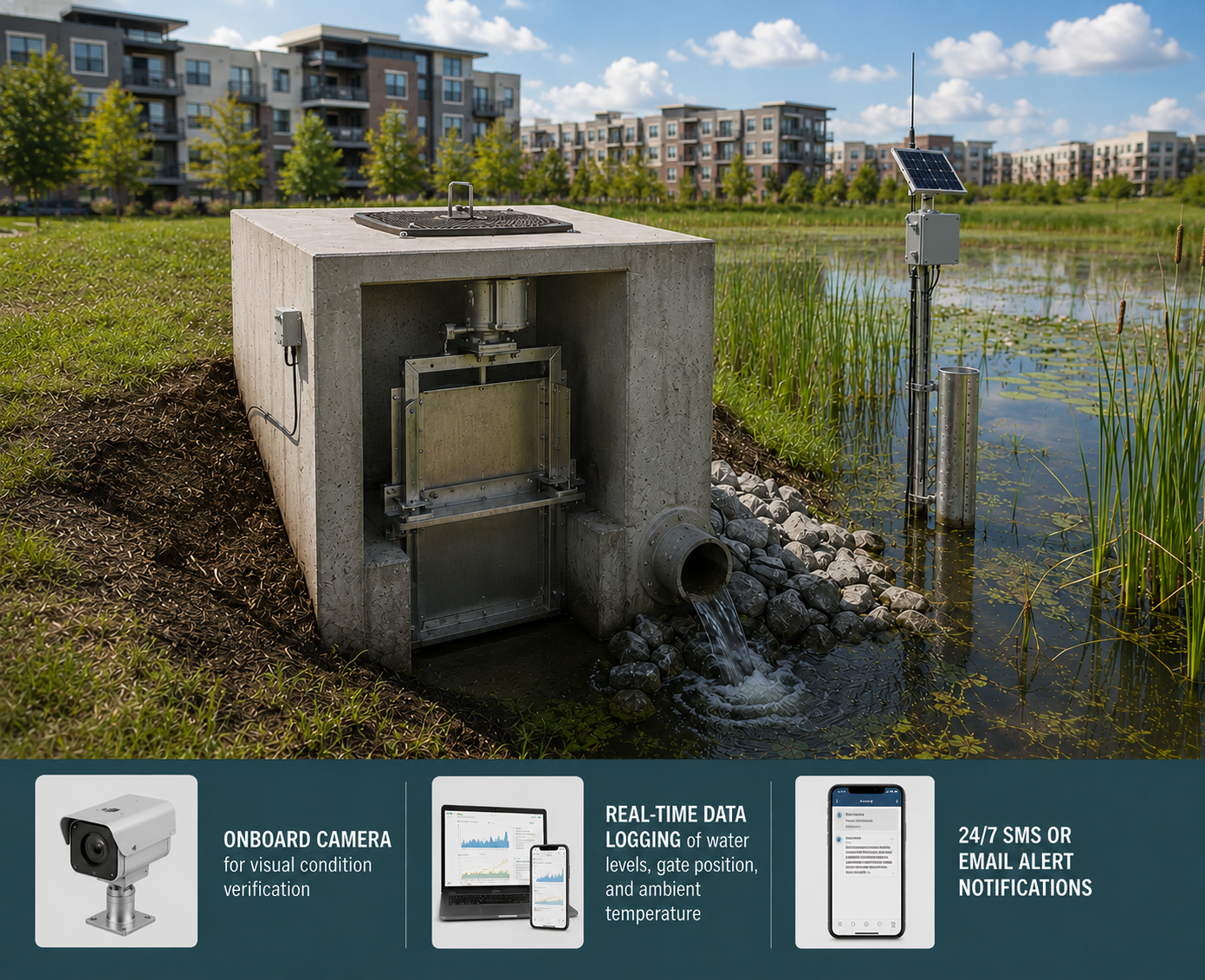
smartPOND’s cloud-connected dashboard gives operators and environmental managers 24/7 visibility into wetland water levels, gate status, and system health. Custom alert thresholds can trigger SMS or email notifications when conditions change, including unexpected water level spikes, battery warnings, or gate position confirmations.
The first year of remote monitoring is included with every installation.
The smartPOND wetland diversion system is designed for projects where stormwater and protected or sensitive wetlands share the same landscape.
When stormwater is held in detention before diversion, or when the system incorporates a batch detention step, smartPOND can help improve the quality of water entering the wetland. Independent University of Texas research demonstrated removal rates of up to 91% Total Suspended Solids, 52% Phosphorous, and 42% Nitrogen when stormwater is held in a batch detention configuration.
smartPOND’s real-time optimization capability can also reduce required detention pond volumes by up to 50%.

If you and your team would like to learn more about smartPOND, wetland diversion, remote monitoring, or intelligent stormwater control, schedule a LUNCH & LEARN today.